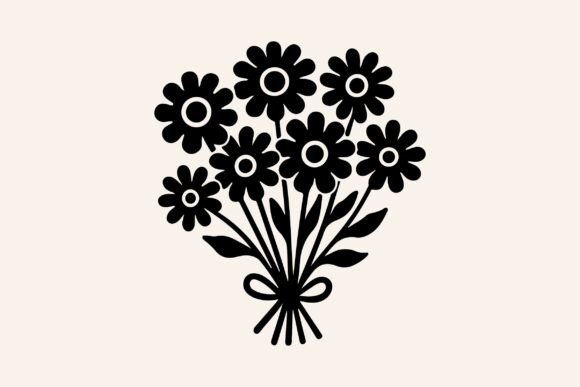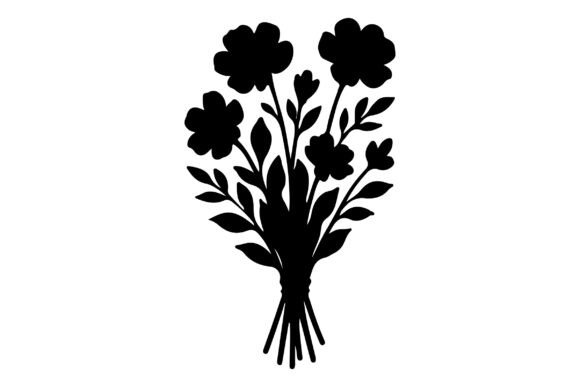
Flower Bouquet Silhouette Vector Clipart
As a designer who spends half my life staring at stitch density charts and the other half trying to make handmade goods look expensive, I don’t have time for designs that fall apart under the needle. When I see a new asset labeled as Flower Bouquet Silhouette Vector Clipart, my first instinct is skepticism. Silhouettes are deceptively simple. They rely entirely on clean lines and strong shapes because they lack the internal detail of a fully rendered illustration. If the vector path isn’t perfect, the embroidery will look jagged, muddy, or unintentionally abstract.
I recently pulled this specific design into my workflow to test its viability for a batch of custom boutique orders. The goal was to create a cohesive line of personalized gifts—specifically targeting Etsy sellers and small business owners who need reliable design assets that translate well from screen to fabric. Here is my honest breakdown of how this machine embroidery design performs in the real world, where it shines, and where you might want to think twice before hitting start.
First Impressions: Mood and Visual Personality
The moment you open the file, the mood is immediately established. This isn’t a whimsical, hand-drawn sketch; it’s a bold, graphic statement. The silhouette approach gives it a modern, minimalist aesthetic that fits perfectly with current trends in nursery decor and contemporary apparel. Because it is a Graphics category item rooted in Illustrations, the visual weight is heavy. It demands space.
In terms of layout, the bouquet feels balanced but dynamic. The curves of the stems and the organic shapes of the blooms suggest movement, even though the design is static. For a crafter looking to add a touch of elegance without overwhelming a garment, this offers a sophisticated alternative to busy floral prints. It feels like a design that belongs on a high-quality canvas tote or a structured cotton apron rather than a flimsy t-shirt. The "silhouette" aspect means it reads clearly from a distance, which is crucial for brand recognition on merchandise.
Real-World Application: Where This Design Sings
I tested this embroidery file across several different product types to see where it adds the most value. The results were consistent regarding quality, but varied significantly in terms of customer appeal.
- Tote Bag Design: This is arguably the strongest use case. A large floral silhouette on a neutral-colored canvas bag creates an instant boutique feel. It pairs beautifully with simple text underneath, making it ideal for personalization. The contrast between the dark thread and light fabric makes the shape pop, ensuring the finished product looks professional and intentional.
- Sweatshirt Embroidery: For cozy, oversized hoodies, this design works well when placed slightly off-center on the chest or centered on the back. The bold nature of the silhouette stands up to the texture of fleece or heavy cotton blends. It gives the garment a curated, "slow fashion" vibe that appeals to buyers looking for unique custom apparel.
- Baby Embroidery: There is a surprising versatility here for baby items. On a plain white onesie or a muslin blanket, a soft-colored silhouette (like dusty rose or sage green) feels gentle and modern. It avoids the cluttered look of traditional baby florals, appealing to parents who prefer minimalist aesthetics.
- Embroidered Patch: Because the design is self-contained and has a clear outline, it translates exceptionally well as a standalone patch. You can easily add a border and attach it to denim jackets, caps, or backpacks. This expands its utility beyond just direct-to-garment applications.
Critical Considerations: Stitch Density and Fabric Choice
No design is perfect for every surface. As an experienced reviewer, I need to highlight where this digital embroidery file might struggle. The silhouette style relies heavily on fill stitches or dense satin borders to define the edges. If your machine’s tension is off, or if you skip the proper stabilizer, you risk puckering.
Here is where you need to be careful:
- Small Hoop Sizes: Do not attempt to downscale this design too much. If you shrink it below 3 inches, the individual flower shapes will merge into a blob. The details will be lost, and the "bouquet" aspect will disappear. Keep the hoop size generous to maintain clarity.
- Textured Fabrics: While linen and canvas work well, highly textured fabrics like bouclé or thick sherpa can obscure the fine curves of the silhouette. The needle may also struggle to penetrate these materials cleanly, leading to skipped stitches. Stick to smooth, tightly woven fabrics for the best result.
- Stretchy Fabrics: If you are working with jersey or knit fabrics, you must use a tear-away or cut-away stabilizer correctly. Without it, the tension of the fill stitch will distort the fabric, warping the circular elements of the flowers. Always pre-stretch the fabric slightly during hooping to ensure a flat stitching area.
- Dark Fabric: Using a black or navy silhouette on a dark background requires high-contrast thread, such as metallic or bright white. Otherwise, the design will vanish. Test your thread colors against your fabric swatch before committing to a full production run.
Technical Execution: From Vector to Thread
One of the biggest advantages of starting with a vector-based Illustrations source is the ability to edit. Before converting this to an applique design or a pure stitch file, I recommend checking the paths. Ensure that the overlapping petals are grouped logically so your software doesn’t create unnecessary jump stitches.
If you are using this for commercial embroidery, pay close attention to the stitch density. Silhouettes can sometimes be over-packed by automated digitizing software, resulting in stiff, cardboard-like fabric. Manually adjusting the stitch length in the outer edges can soften the look and make the finished piece more comfortable to wear or use. Also, consider using a combination of satin stitch for the outlines and running stitch for any inner detailing if the vector allows, to reduce bulk.
Another practical tip is to mock up the design in black and white. Sometimes color hides poor proportions. If the silhouette looks unbalanced in grayscale, it will definitely look unbalanced in thread. This step saves time and prevents costly mistakes on expensive garments.
Value for Small Business Owners and Makers
For Etsy sellers and craft business owners, the value of this design lies in its versatility and perceived professionalism. A clean, high-quality embroidery project like this signals attention to detail. Customers are willing to pay a premium for items that look professionally made rather than hastily stitched.
This design is particularly effective for seasonal marketing. It works naturally for spring collections, wedding favors, Mother’s Day gifts, and holiday home decor. Its simplicity allows it to fit into various themes without feeling out of place. Whether you are creating personalized gifts for individuals or bulk orders for corporate clients, this machine embroidery design provides a reliable foundation.
However, remember that licensing matters. Even though this is a digital product, verify the commercial use rights before listing your small shop product online. Assuming you have the right to sell, this design offers a low-risk, high-reward option for expanding your inventory.
Final Verdict
The Flower Bouquet Silhouette Vector Clipart is a solid addition to any designer’s library. It is not a complex, narrative-heavy piece, but it excels at being bold, clear, and aesthetically pleasing. It respects the medium of embroidery by leveraging strong shapes that hold up to the mechanical nature of stitching.
Use it on stable fabrics, respect the minimum sizing limits, and pair it with thoughtful color choices. If you do, you will find that this design helps elevate your handmade product from a hobbyist craft to a polished, marketable commodity. It is a tool that, when used with care, builds trust with your customers through consistent, high-quality presentation.