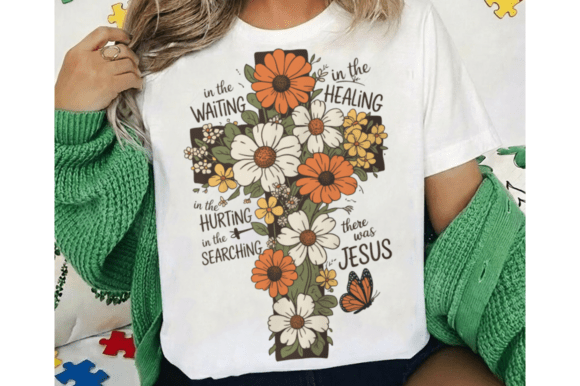
Retro There Was Jesus Svg, Vintage Chris
As a designer who spends more time judging stitch density than scrolling through social feeds, I approach every new digital asset with a healthy dose of skepticism. The market is flooded with generic religious clipart and lazy vector conversions that look terrible once they hit the hoop. That is why I took Retro There Was Jesus Svg, Vintage Chris out for a test drive before recommending it to my network of embroidery designers, Etsy sellers, and craft business owners. This isn’t just another graphic file; it is a specific aesthetic choice that requires careful consideration regarding fabric, thread, and finish.
The product comes from Green Zebra T-Shirt Design Store, and while the description highlights its utility for Print-on-Demand stores as a high-resolution PNG at 4500×4500 pixels and 300 DPI, an experienced embroiderer knows that resolution alone does not guarantee a successful machine embroidery design. High pixel counts are excellent for clear printable mockups and digital previews, but they do not translate directly into the mechanical reality of needle penetration, thread tension, or fabric distortion. When evaluating this piece for real-world application, we have to look past the static image and imagine how it behaves in motion.
First Impressions: Mood and Visual Personality
The immediate visual pull of Retro There Was Jesus Svg, Vintage Chris lies in its nostalgic typography and layout. It taps into the "vintage" trend that has dominated the handmade sector for years, appealing to customers who want faith-based apparel that feels curated rather than mass-produced. The mood is warm, inviting, and slightly casual. It avoids the overly solemn or traditional religious imagery that can feel stiff, opting instead for a vibe that fits comfortably on a coffee shop apron or a weekend sweatshirt.
For the embroidery project, this translates to a design that likely relies heavily on clean lines and bold shapes. In the world of illustrations converted to graphics for stitching, clarity is king. If the original SVG contains intricate filigree or tiny serif details that disappear at small scales, it will become a nightmare to digitize properly. However, the retro aesthetic suggests a design built for impact, which usually means larger focal points and fewer, more manageable details. This makes it a strong candidate for custom apparel where the message needs to be readable from a distance.
Real-World Application: Where This Design Shines
I envision Retro There Was Jesus Svg, Vintage Chris performing exceptionally well on structured, medium-weight fabrics. Let’s talk about a specific scenario: preparing a batch of custom embroidered tote bags for a holiday gift guide. Tote bags provide a large, stable canvas that allows the retro text to breathe. The contrast between a sturdy cotton canvas bag and soft, high-quality polyester threads creates a tactile luxury that customers appreciate.
Similarly, this design would shine on sweatshirt embroidery projects. The vintage theme pairs naturally with heather grey or muted olive crewnecks. When placed on the chest or centered on the back, the design leverages the texture of the fleece to enhance the retro feel. For baby embroidery, such as onesies or burp cloths, the softer, rounded nature of retro fonts often reads as gentler and more approachable than sharp, modern geometric types. It works beautifully for personalized gifts where the recipient values sentiment over speed.
Furthermore, consider its potential in commercial embroidery for small shops. An Etsy seller looking to expand their catalog might find this design versatile enough to apply to aprons, kitchen towels, and pillow covers. The theme is broad enough to fit into home decor niches without feeling out of place. It bridges the gap between wearable art and home accents, allowing you to create cohesive collections. For instance, a matching set of a mother’s tote bag design and a nursery pillow cover tells a story of lifestyle consistency that boosts brand trust.
Technical Considerations and Pitfalls
However, no design is without its challenges. As we move from screen to stitch, several factors must be carefully managed. First, consider the stitch density. Retro designs often use thick block letters or heavy outlines. If the underlying digitization (or the conversion process) packs too many stitches into a small area, the fabric will pucker, especially on lightweight materials. You must check whether the design uses appropriate fill stitch techniques or if it relies too heavily on dense satin stitch borders that can swallow up fine details.
Fabric choice is critical. While this design looks great on a flat, stretched surface, it may struggle on textured fabrics like chunky knits or bouclé, where the background noise competes with the thread. Similarly, stretchy fabric requires extra caution; if the stabilizer is not chosen correctly, the retro lettering may warp during washing. Dark fabrics present another variable. To maintain the vintage aesthetic, you might opt for cream or gold threads, but you must ensure sufficient contrast so the design remains legible. Always test your thread colors against your actual fabric stock, not just the digital preview.
There are also areas where this design should be used carefully. Avoid attempting to stitch this on very small hoop sizes unless the digitizer has significantly simplified the artwork. Tiny lettering or detailed corners can become illegible blobs if the scale is reduced too much. Additionally, curved surfaces like caps or hats require a design that can conform to the curve without distorting the text. A wide, horizontal layout might look distorted on a curved cap front, whereas a vertical or arched placement might work better. If you plan to produce embroidered patches, ensure the border is robust enough to withstand edge-stitching without fraying or losing shape.
Practical Designer Notes for Success
To get the best results from Retro There Was Jesus Svg, Vintage Chris, follow these practical steps before committing to a full production run:
- Test on Scrap Fabric: Never assume a digital file will stitch perfectly. Run a sample on the exact fabric and stabilizer combination you plan to use. Check for puckering, thread breaks, or misalignment.
- Review Stitch Density: Inspect the design file for any overly dense areas. If possible, adjust the stabilizer type—using cut-away for stretchy fabrics or tear-away for wovens—to support the structure.
- Check Contrast in Black and White: Convert your mockup to black and white to ensure the design holds up without color distraction. This helps verify that the shape and form are clear even if the thread colors are subtle.
- Inspect Small Details: Zoom in on the smallest elements. If they are thinner than 1mm, they may not hold up well to frequent washing or rough handling.
- Confirm Licensing: Before listing any finished product or selling digital embroidery files, double-check the license terms provided by Green Zebra T-Shirt Design Store. Ensure you have commercial rights for the volume of items you intend to sell.
In conclusion, Retro There Was Jesus Svg, Vintage Chris offers a compelling option for designers seeking a blend of faith, nostalgia, and style. Its strength lies in its broad appeal and suitability for a variety of handmade products. By respecting the technical limitations of embroidery and planning your fabric and thread choices carefully, you can transform this digital asset into a professional, high-value item that resonates with customers. Whether you are creating a one-off personalized gift or scaling up a line of small shop products, this design provides a solid foundation for creative success.