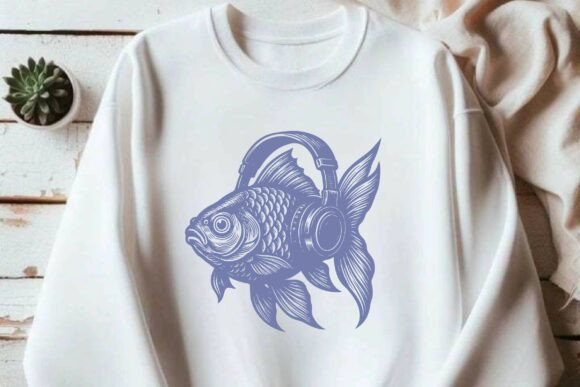
Goldfish Wearing Modern Music Headphones
As a designer who spends more time staring at stitch charts than actual screens, I approach every new digital download with a mix of curiosity and skepticism. The market is flooded with clipart that looks great on a monitor but falls apart under the needle. Recently, I pulled down a file titled Goldfish Wearing Modern Music Headphones to see if it had the legs for a real-world application. I wasn’t looking for just another cute animal graphic; I was looking for a viable machine embroidery design that could hold its own in a boutique setting or a busy Etsy shop.
The premise is inherently playful: a goldfish, an aquatic creature known for short attention spans, rocking modern music headphones. It’s a juxtaposition of the serene and the loud, the traditional and the contemporary. My first impression was one of immediate visual engagement. The layout feels balanced, avoiding the cluttered look that often plagues novelty designs. For anyone building a brand around humor, pop culture, or quirky aesthetics, this embroidery file offers a strong starting point. But does it translate well from screen to fabric? Let’s dig into the practicalities.
Visual Personality and Mood
The strength of this illustrations category piece lies in its personality. It isn’t just a fish; it’s a character. The modern headphones suggest a vibe that appeals to Gen Z and Millennials, making it highly relevant for current trends. When I visualize this on a finished product, the mood shifts from simple decoration to statement-making. It works exceptionally well as a custom apparel accent, particularly on items meant to express individuality.
In terms of artistic direction, the design avoids being overly complex in a way that would cause stitching headaches. The lines are clean, which is crucial for maintaining clarity during production. This isn’t a delicate watercolor sketch that requires microscopic precision; it’s a bold graphic that demands confidence in execution. That confidence translates to higher perceived value in the final handmade product. Customers can tell when a design is crisp versus when it is muddy or distorted.
Real-World Application Scenarios
I ran this concept through several potential use cases to see where it fits best. Here is how I see Goldfish Wearing Modern Music Headphones performing in actual projects:
- Tote Bag Design: A canvas tote with this centered or slightly offset creates an instant conversation starter. The contrast between the sturdy bag material and the whimsical fish makes for a compelling small shop product.
- Sweatshirt Embroidery: Placed over the heart or on the back of a crewneck sweatshirt, this design adds a touch of streetwear flair. The bold nature of the headphones pops against typical heather grey or black fabrics.
- Baby Embroidery: Surprisingly, this works well for nursery decor or baby onesies. Parents love unique themes that aren’t the standard teddy bears or bunnies. It serves as a memorable personalized gift for a music-loving parent.
- Embroidered Patch: If you sell patches, this is a ready-made seller. The distinct shape allows for easy bordering, making it a perfect accessory for denim jackets or backpacks.
- Holiday Embroidery: During summer months or beach-themed events, this fits perfectly. It also has potential as a quirky stocking stuffer or teacher appreciation gift.
For the Etsy seller or craft business owner, versatility is key. This design bridges the gap between niche hobbies (aquariums) and mainstream interests (music). By offering it as a digital embroidery file, you tap into two markets: those who want the physical item and those who want to create their own.
Performance on Different Fabrics
The success of any embroidery project hinges on fabric choice. With Goldfish Wearing Modern Music Headphones, lighter fabrics like cotton twill or jersey show off the detail best. The thread colors need to stand out against the background. On dark fabrics, you will likely need a cut-away stabilizer and possibly a backing layer to prevent the fabric texture from showing through the stitches, especially if the design uses large areas of fill stitch.
If you are attempting this on a curved surface like a cap, pay close attention to the distortion. The roundness of the fish body might stretch if not hooped correctly. Testing on scrap fabric is non-negotiable here. You want to ensure the stitch density holds up without puckering the brim.
Technical Considerations for Designers
Before uploading this to your machine or listing it for sale, there are technical checks every professional should perform. The initial download is a ZIP folder containing the necessary assets, but raw data needs preparation.
- Stabilizer Selection: Depending on the fabric weight, you may need different stabilizers. For stretchy knits, a tear-away might suffice for small accents, but a cut-away is safer for larger prints to maintain longevity.
- Thread Contrast: Ensure your thread palette complements the design. Goldfish are typically orange or red; pairing them with bright blue or yellow headphones creates high energy. Muted tones might make the design look dull unless you are aiming for a vintage aesthetic.
- Detail Inspection: Zoom in on the digital preview. Are the ear cups detailed enough to render clearly? If the satin stitch borders are too thin, they may break or fray after washing. Adjusting the stitch width in your software might be necessary for optimal results.
- Hoop Size Verification: Confirm that the design fits within your standard hoop sizes. While most modern machines handle mid-sized designs well, oversized graphics can limit your placement options on garments.
Where to Exercise Caution
Not every surface is created equal. There are specific scenarios where Goldfish Wearing Modern Music Headphones might struggle:
- Small Hoop Sizes: If the design is scaled down too much, the fine details of the headphones may disappear into a blob of color. Keep the minimum size reasonable to preserve legibility.
- Textured Fabrics: Bouclé or heavy tweed can hide the nuances of the running stitch and fill stitch combinations. Stick to smoother surfaces for the cleanest look.
- Frequent Washing: For items like kitchen towels or aprons, ensure the design is anchored well. Loose threads on the headphone bands could snag. A dense stitch structure helps mitigate this risk.
- Dense Stitch Areas: If the design relies heavily on fill stitches, thick layers of thread can make the fabric stiff. This is acceptable for home decor like pillow covers but less ideal for wearable comfort items unless stabilized properly.
Final Verdict for Commercial Use
From a business perspective, this design has solid commercial viability. It is unique enough to stand out in a crowded feed yet familiar enough to appeal to a broad audience. As a design asset, it encourages creativity. Buyers can experiment with different thread brands, adding metallics for the headphones or variegated threads for the fish scales.
For the creative entrepreneur, the key is presentation. Use printable mockups that showcase the design on various products—totes, shirts, and hats. Show the customer how Goldfish Wearing Modern Music Headphones transforms a plain garment into something special. Transparency about licensing is also vital; confirm whether the purchase includes commercial rights for selling finished goods. If it does, you have a powerful tool for boosting your brand consistency and buyer engagement.
In conclusion, this is a fun, well-composed graphics file that rewards careful execution. It doesn’t require advanced technique to look good, but it benefits from thoughtful setup. Whether you are making a single personalized gift for a friend or producing a batch for a craft fair, this design delivers charm and quality. Just remember to test, stabilize, and trust your eyes before hitting the start button.